Published by Dogpay ·

From AI Applications to the Agent Economy, Payments Are Becoming the New Infrastructure.
What Happens to the Payment Layer When AI Agents Start Paying?
On the evening of August 27, DogPay hosted an event in Hong Kong titled “The Payment Layer for the Agent Economy.” Held as a side event during Bitcoin Asia, the event focused on AI agents, global payments, agentic payments, and intelligent transactions. Guests came from a range of fields, including payments, Web3, AI applications, trading, and cross-border commerce.
This was not simply an event about “payment tools.” It was a discussion about the commercial infrastructure of the future.
In the past, when we talked about AI, we focused more on model capabilities, application efficiency, and content generation. When we talked about payments, we focused more on fees, payment channels, settlement speed, and transaction success rates. But as AI Agents begin to search, make decisions, place orders, trade, settle payments, and collaborate on behalf of humans, a new question emerges:
In the commercial world of the future, who will be making the payments?
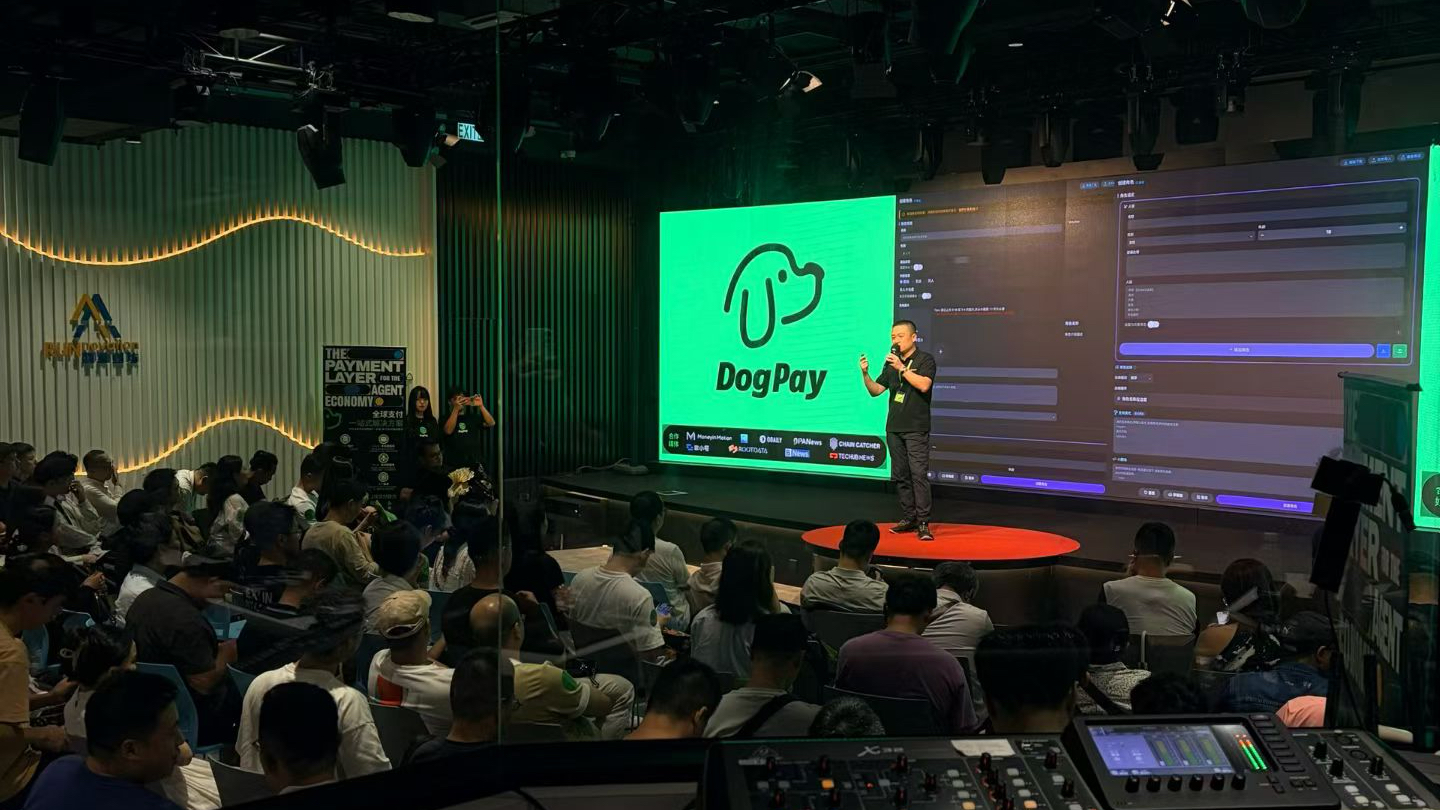
During the event, DogPay presented a core perspective: AI-powered commerce needs more than a simple payment button. It needs a value-flow network capable of supporting identity, accounts, usage tracking, settlement, and revenue sharing.
From DogID to DogRouter and then DogPay, these products represent three layers of infrastructure required as the Agent Economy takes shape: identity, usage, and payments.
AI Agents are not merely tools for calling models. They are becoming new participants in the commercial ecosystem. They need to be identified, authorized, and measured. They also need to trigger payments, revenue sharing, and reconciliation after completing tasks.
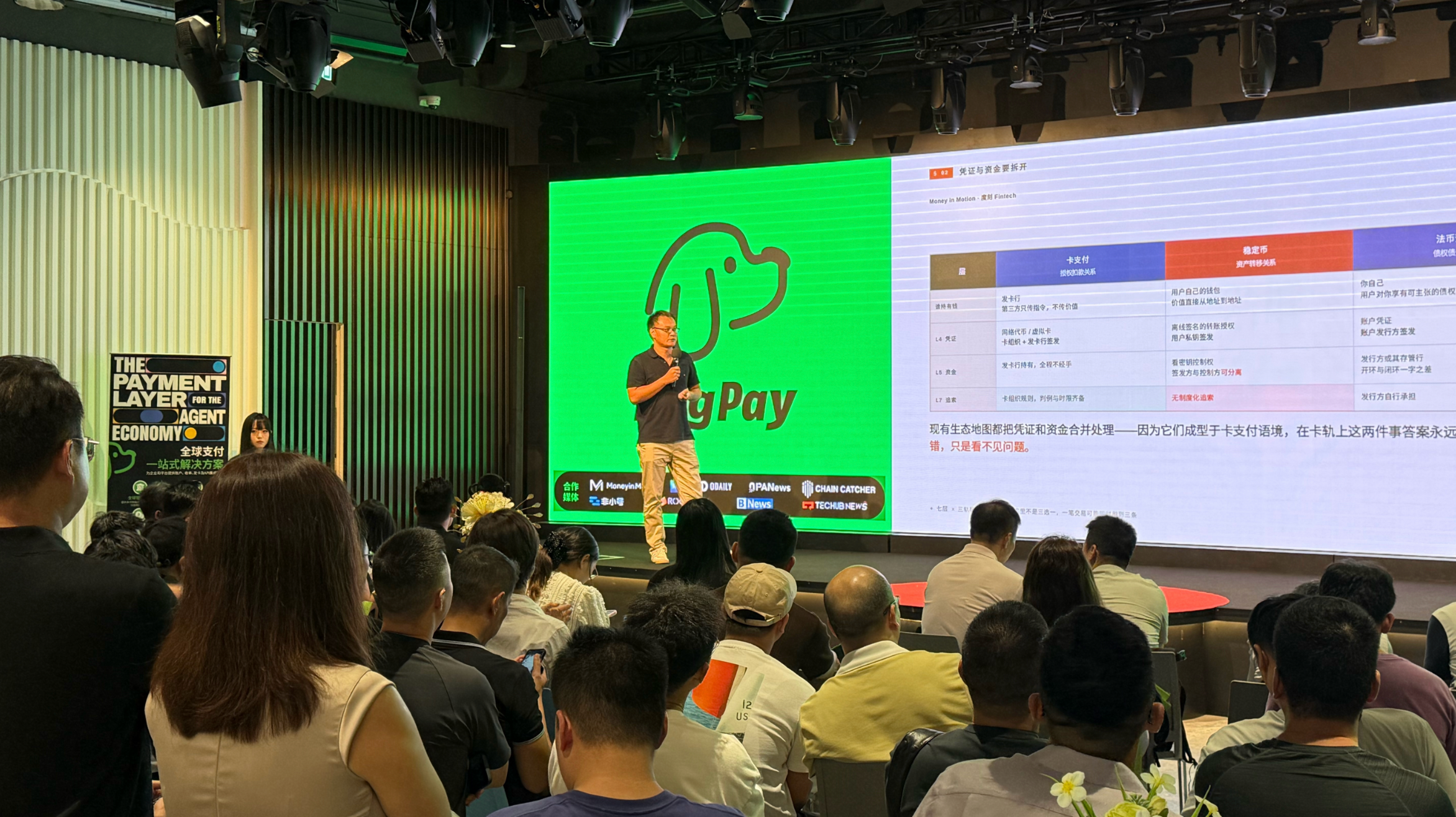
During his presentation, Will noted that the key change brought by Agentic Payment is that the payer may, for the first time, no longer be a human, but an Agent.
Payment will no longer be merely the final step after a user clicks a button. Instead, it will be embedded into task execution, budget controls, permission management, result-based billing, and dynamic pricing.
This means that future payment systems will need to handle more than just “who pays whom.” They will also need to answer:
Why is the payment being made? Who authorized it? Under what conditions should it be triggered? How should it be recorded and traced?
In the discussion on Agent Trading, Dayu took the question into the world of trading.
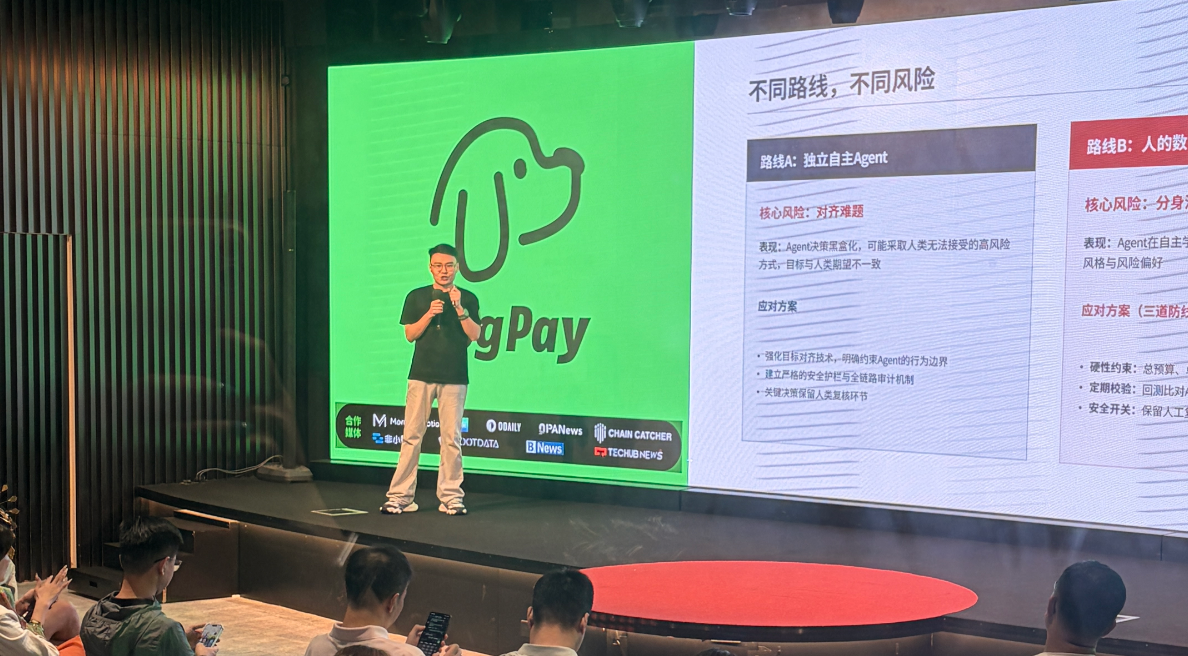
The role of AI Agents in trading may evolve along two paths. One is for the Agent to become an independent trading entity that actively identifies opportunities and generates trading strategies. The other is for it to become a digital counterpart of the trader, replicating the individual’s trading system, risk preferences, and execution discipline.
The former represents greater potential, while the latter is closer to practical applications today.
Regardless of which path the industry follows, both will ultimately depend on infrastructure such as wallet security, permission management, trusted data, execution cost control, audit trails, and clearly defined lines of responsibility.
This was also the most important takeaway from the event: the combination of AI and payments is not simply about connecting an AI tool to a payment system. It is about redefining the participants in future commerce and the way value moves between them.
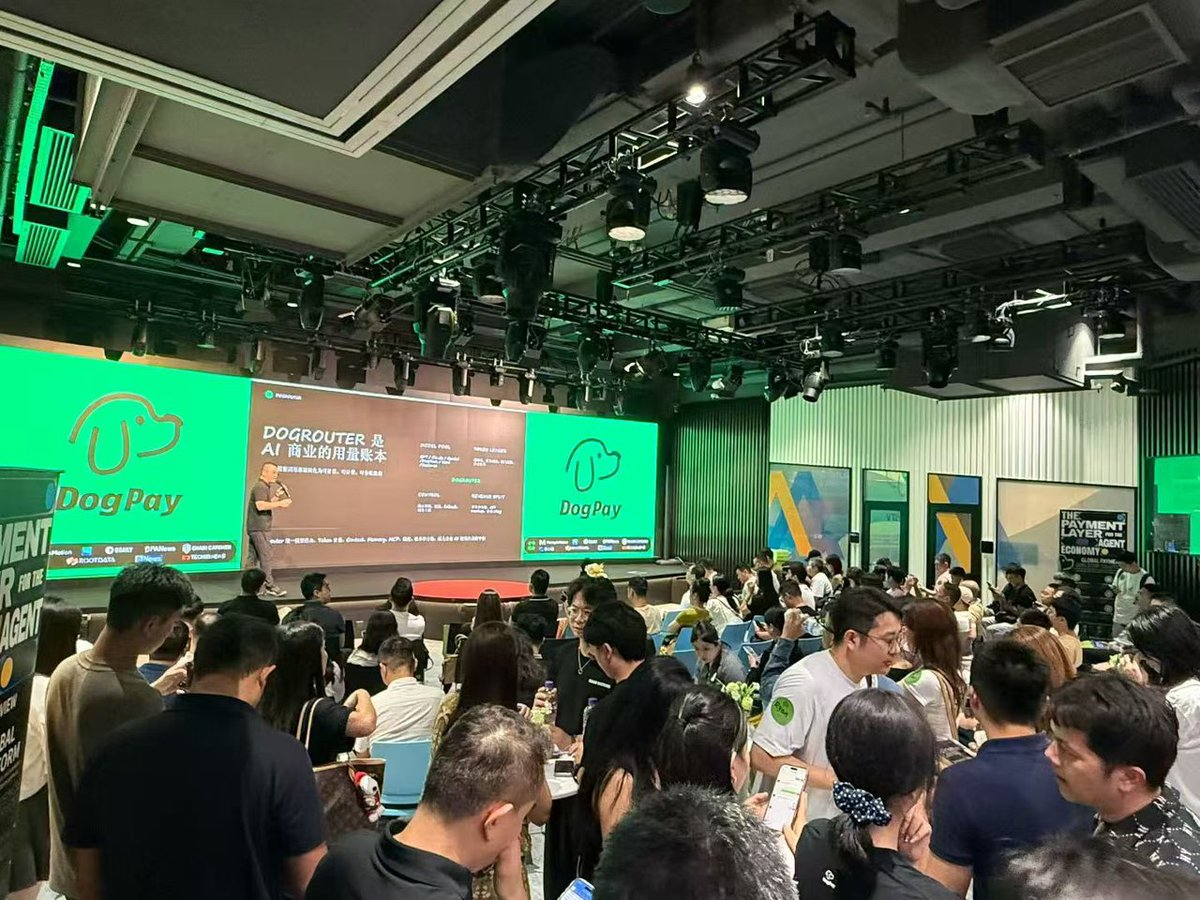
When enterprises, developers, creators, traders, and even AI Agents themselves enter the same collaborative network, the way value is recorded, distributed, and settled will become a central issue.
This is precisely the foundational layer where DogPay is positioning itself.
Connecting AI with global payments is, in essence, about building a new commercial foundation for the Agent Era.
Future AI-powered commerce will not be driven solely by models or applications. It will be supported jointly by identity, permissions, usage, payments, settlement, and compliance.
Based on the discussions at the event, the Agent Economy is not a distant concept. It is already gradually emerging across areas such as content production, API usage, cross-border payments, crypto payments, automated revenue sharing, and intelligent trading.
The Hong Kong event served as a reminder: AI is transforming productivity, while payments will determine how that productivity truly enters the commercial world.