Published by Dogpay ·
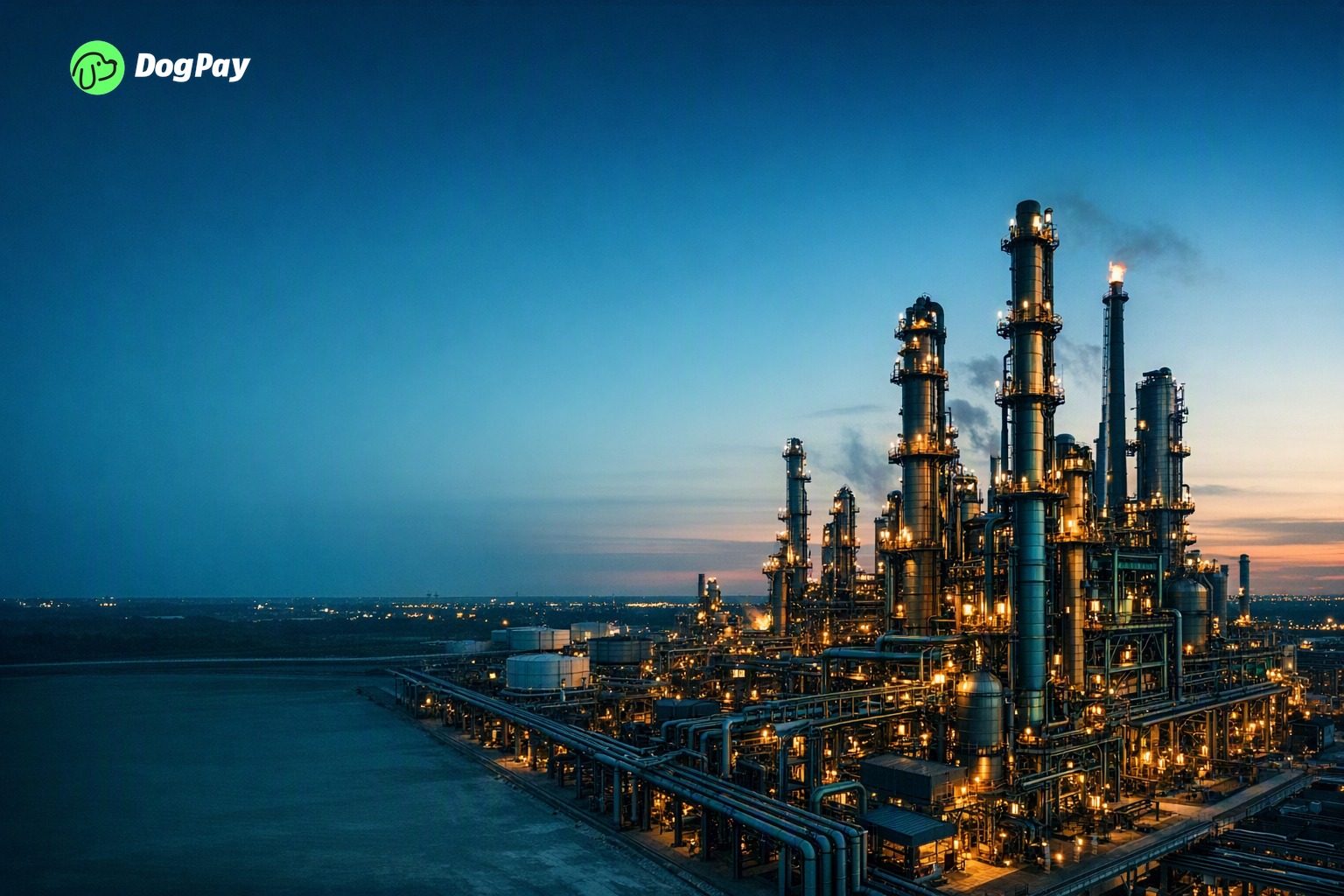
Dangote Refinery Drives Nigeria's 767% Surge In Fuel Exports To Europe
English version above, Chinese version below.
Trend One: Nigeria's Energy Trade Flips — From Importer to Regional Export Hub
Nigeria's seaborne refined petroleum exports to Europe surged 767% to 130,000 barrels per day in Q2 2026, up from just 15,000 b/d in 2023, according to an August 24 analysis by the U.S. Energy Information Administration using Vortexa shipping data. The Dangote refinery, with its 700,000 b/d crude distillation capacity following maintenance completed in February 2026, is the primary driver. Intra-Nigerian petroleum shipments climbed to 211,000 b/d in Q2 2026 (from 81,000 b/d in 2025), while seaborne imports fell from nearly 400,000 b/d in 2023 to under 130,000 b/d.
African markets received almost 120,000 b/d of Nigerian exports, while Asia and Oceania took roughly 110,000 b/d. Total Q2 exports reached 350,000 b/d. Dangote plans to add another 750,000 b/d crude distillation unit by 2028, bringing total capacity to 1.45 million b/d. The refinery secured a $1 billion underwriting programme ahead of a planned IPO on the Nigerian stock market as early as October. Dangote is also pursuing a $17 billion refinery in Lamu, Kenya, offering East African governments a combined 30% equity stake.
On the domestic front, July 2026 data from the Nigerian Midstream and Downstream Petroleum Regulatory Authority (NMDPRA) showed daily petrol supply fell 21% month-on-month to 25.8 million litres, while consumption dropped 25% to 35.7 million litres. The Dangote refinery produced 25.9 million litres per day of petrol in July but exported 3.4 million litres per day, while diesel exports reached 11 million litres per day. Petrol stock sufficiency rose from 19.7 days to 22.4 days. Imported petrol actually increased 9% to 19.7 million litres per day during the period.
Separately, on August 25, NNPC and its deepwater joint venture partners — Shell, Esso, and Agip — executed commercial agreements for the Bonga South-West Aparo project, advancing it toward a Final Investment Decision. The project is expected to attract $15–21 billion over its lifetime, with peak production of 175,000 barrels of oil per day and 140 million standard cubic feet of gas per day. The milestone follows President Tinubu's approval of the Deep Offshore Oil and Gas Projects Incentives (Tax Remission) Order 2026. The project's Pre-FEED phase is complete, and a preferred FPSO contractor has been selected.
On the trade front, Chinese imports from Nigeria jumped 81% year-on-year to $2.25 billion in the first half of 2026, following China's zero-tariff policy for Nigerian goods. Nigeria's FX market posted its strongest weekly turnover of 2026 at $5.06 billion in the week ended August 21 — a 146% increase from the prior week — with spot transactions crossing $5 billion for the first time.
Trend Two: Digital Infrastructure Consolidation — Telecom, Cloud, and the Cost of Being Connected
MTN Group's first-half 2026 results, released August 24, show Nigeria and Ghana emerging as the group's primary cash engines. The two West African markets together upstreamed R9.3 billion to the group, accounting for 67% of total cash upstreamed by operating companies. Ghana contributed R6.6 billion and Nigeria R2.7 billion, compared with R2.1 billion from South Africa. Group service revenue rose 17.5% in constant-currency terms to R115 billion, while EBITDA before once-off items increased 24.4% to R56 billion, lifting the EBITDA margin to a record 47%. The group approved a R6 billion share buyback programme.
On the same day, MTN disclosed that Nigeria's Federal Competition and Consumer Protection Commission (FCCPC) granted conditional approval for its $6.2 billion acquisition of IHS Holding Limited. The condition: MTN must sell down up to 30% of the Nigerian component of the IHS business at market prices over time. IHS shareholders had already approved the deal at an August 4 extraordinary general meeting. The all-cash transaction values IHS at $2.2 billion in cash with a $6.2 billion enterprise value including debt. IHS currently controls 41% of Nigeria's roughly 40,000 telecom towers.
On the policy side, NITDA inaugurated the National Sovereign Cloud Initiative Implementation Taskforce on August 25, moving Nigeria's cloud strategy from framework development to coordinated execution. The government targets $750 million in private investment for cloud and data-centre infrastructure over the next 24 months. In May 2026, Kasi Cloud unveiled the first phase of a 100-megawatt data centre in Lagos, aimed at capturing part of the estimated $850 million Nigerian businesses spend annually on foreign cloud services.
The Federal Government also ratified a framework for a digitised national addressing system on August 25, chaired by Vice President Kashim Shettima. NIMC will handle identity verification, CAC will support business address verification, and NIPOST will manage postcode administration. A GIS-enabled alphanumeric digital postcode system is scheduled for launch by October 2026.
The connectivity story has a darker side. Check Point Software data shows Nigerian organisations faced an average of 4,361 attempted cyberattacks per week in June 2026, placing Nigeria second in Africa behind South Africa. Kaspersky recorded 1.6 million web-based attack attempts targeting Nigerian users in H1 2026, with 18.4% of internet users encountering a threat. Approximately 281,500 Nigerian user accounts were compromised in Q1 2026 and are circulating on dark web marketplaces. Password-stealer detections rose 26% in 2025, while spyware attacks increased 14%. The Sterling Bank incident earlier this year involved a threat actor exploiting a publicly disclosed web application vulnerability for remote code execution.
Trend Three: Security Pressures and 2027 Election Fault Lines
On August 22, armed groups simultaneously attacked four mosques during Friday prayers in Dekara, Kpenya, Sabon-Gida, and Gidan-Zana communities in Borgu Local Government Area of Niger State, abducting hundreds of worshippers. Kidnappers later released a video showing the captives. On August 25, President Tinubu directed the Armed Forces, Police, DSS, and all security agencies to launch a coordinated rescue operation, demanding regular briefings from Service Chiefs until all victims are accounted for.
The 2027 election contest is already producing policy fault lines. On August 25, Peter Obi — presidential candidate of the Nigeria Democratic Congress — publicly disagreed with Atiku Abubakar's recent pledge to restore fuel subsidies if elected. Speaking at a Nigerian Bar Association conference in Port Harcourt, Obi argued that mismanagement of the subsidy removal proceeds — which he cited as N16 trillion recovered — should not justify reversing the policy. He said Nigeria could have added $10 billion to its sovereign wealth fund had the savings been properly managed. Atiku, the ADC candidate, had pledged during a Facebook interview the previous week to restore subsidies, arguing the removal had failed to improve living conditions.
In Niger, the government accelerated its resource sovereignty agenda. On August 21, the Council of Ministers reassigned the In Azaoua uranium mining permit — previously held by Orano's subsidiary Somaïr — to the state-owned Teloua Safeguarding Uranium Mining Company (Tsumco). Permits held by Goviex were also revoked. The move proceeds despite ongoing international arbitration proceedings.
In Libya, rival factions signed a preliminary election agreement on August 25, though institutional divisions and legal disputes continue to threaten implementation.
In Guinea, a landfill landslide in Conakry killed at least 30 people on August 24, with the government launching emergency search and rescue operations. The disaster highlights chronic urban infrastructure and waste management gaps in West African cities.
Nigeria's $4 billion steel import gap is drawing $2.72 billion in private capital commitments — the most concrete private-sector push in over a decade. Two anchor projects total $1.75 billion: a $1.3 billion revival of the Delta Steel mill and a $450 million Chinese-backed plant in Ogun State. The Ajaokuta Steel Complex remains stalled by legal disputes, but firms like Galaxy Group and Premium Steel are moving forward with government tax breaks, gas incentives, and 35% tariff protection on finished steel products. Manufacturers' confidence in the basic metals and iron and steel subsectors rebounded to 54.8% in Q2 2026, according to the Manufacturers Association of Nigeria.