Published by Dogpay ·
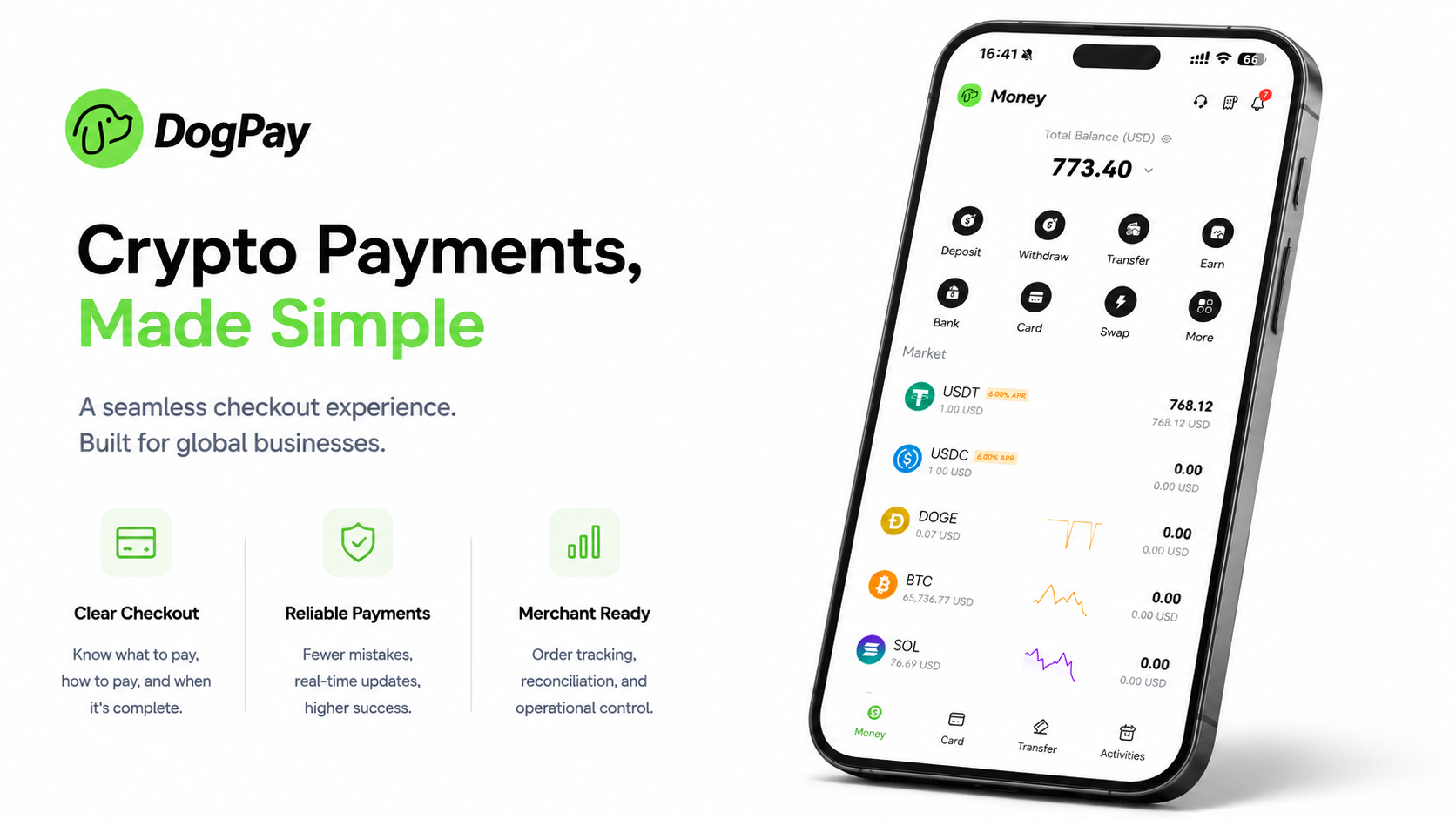
Crypto Checkout: How to Build a Simple, Reliable Payment Experience for Global Merchants
Crypto payment checkout is no longer a niche feature for Web3-native products. For global merchants, it is becoming a practical way to serve users who prefer wallets, stablecoins, and faster cross-border settlement. The opportunity is clear, but the execution matters: a confusing checkout flow can turn payment flexibility into abandonment.
A strong crypto checkout experience should feel familiar to the buyer and operationally manageable for the merchant. Users need to know exactly what to pay, which asset and network to use, when the order expires, and how the payment status will update. Merchants need reliable order tracking, exception handling, and reconciliation. DogPay’s role is to make that infrastructure easier to adopt without forcing teams to build every payment component themselves.
Why checkout design matters for crypto payments
In traditional card checkout, users are trained to expect instant feedback: approved, declined, or retry. Crypto payments introduce a different flow. The user may need to choose an asset, confirm a network, scan a QR code, approve a wallet transaction, and wait for confirmation. If any step is unclear, the buyer may hesitate or leave.
This is why crypto checkout should not be treated as a technical add-on. It is a product experience. The page needs to reduce uncertainty, prevent mistakes, and give users confidence that the merchant will recognize their payment correctly.
What a high-converting crypto checkout should include
First, the payment amount must be clear and stable during the order window. If the order has an expiration time, that countdown should be visible. Users should never wonder whether the quote is still valid.
Second, asset and network selection should be simple. Many failed payments happen because users choose the wrong network or send funds from an unsupported wallet path. Clear defaults, supported network labels, and recovery instructions reduce unnecessary support tickets.
Third, payment status should update in language the user understands. “Waiting for payment,” “Confirming,” “Completed,” “Expired,” and “Amount mismatch” are more helpful than raw system codes. Each state should also suggest the next action.
Fourth, mobile wallet behavior must be reliable. QR codes, deep links, copied addresses, and the return path from wallet to checkout all affect completion rate. Mobile-first crypto users will judge the entire merchant experience by these details.
The merchant-side requirements are just as important
Good checkout is only half the system. Operations teams need to answer practical questions quickly: Which orders are unpaid? Which payments are confirming? Which transactions arrived late? Which orders need manual review? Without a clear dashboard and consistent status model, crypto payments can create more work than they remove.
Reconciliation is another critical piece. Merchants need a reliable connection between the customer order, the on-chain transaction, and the settlement record. This is especially important for finance teams handling multi-market revenue, refunds, and reporting.
How DogPay helps simplify adoption
DogPay can act as the payment infrastructure layer between the merchant’s business system and the user’s wallet. Instead of building wallet support, network handling, transaction monitoring, order-state logic, and administrative tooling from scratch, merchants can integrate a cleaner payment flow and manage the operational details in one place.
This matters because crypto payment adoption is rarely blocked by belief alone. It is blocked by implementation cost, operational uncertainty, and fear of support complexity. A well-designed payment platform lowers those barriers and lets teams test crypto checkout in real business scenarios.
Where merchants should start
The best starting point is a high-intent payment scenario. Examples include account top-ups, digital goods, subscription renewals, high-value orders, gaming credits, SaaS invoices, or regions where card coverage is limited. These use cases make it easier to measure whether crypto checkout improves payment completion, settlement speed, or operating cost.
Before scaling, teams should track four core signals: checkout completion rate, payment exception rate, average confirmation time, and reconciliation workload. These metrics show whether the new payment option is improving the business rather than simply adding another channel.
Final thoughts
Crypto checkout works best when it feels simple to the user and predictable to the merchant. The buyer should see a clear path from order to payment completion. The merchant should see reliable status, clean records, and fewer manual exceptions.
For global teams evaluating stablecoin or crypto payments, DogPay offers a practical way to move from curiosity to implementation. Start with one measurable use case, observe the operational data, and expand only when the payment experience proves itself in real orders.