Published by Dogpay ·
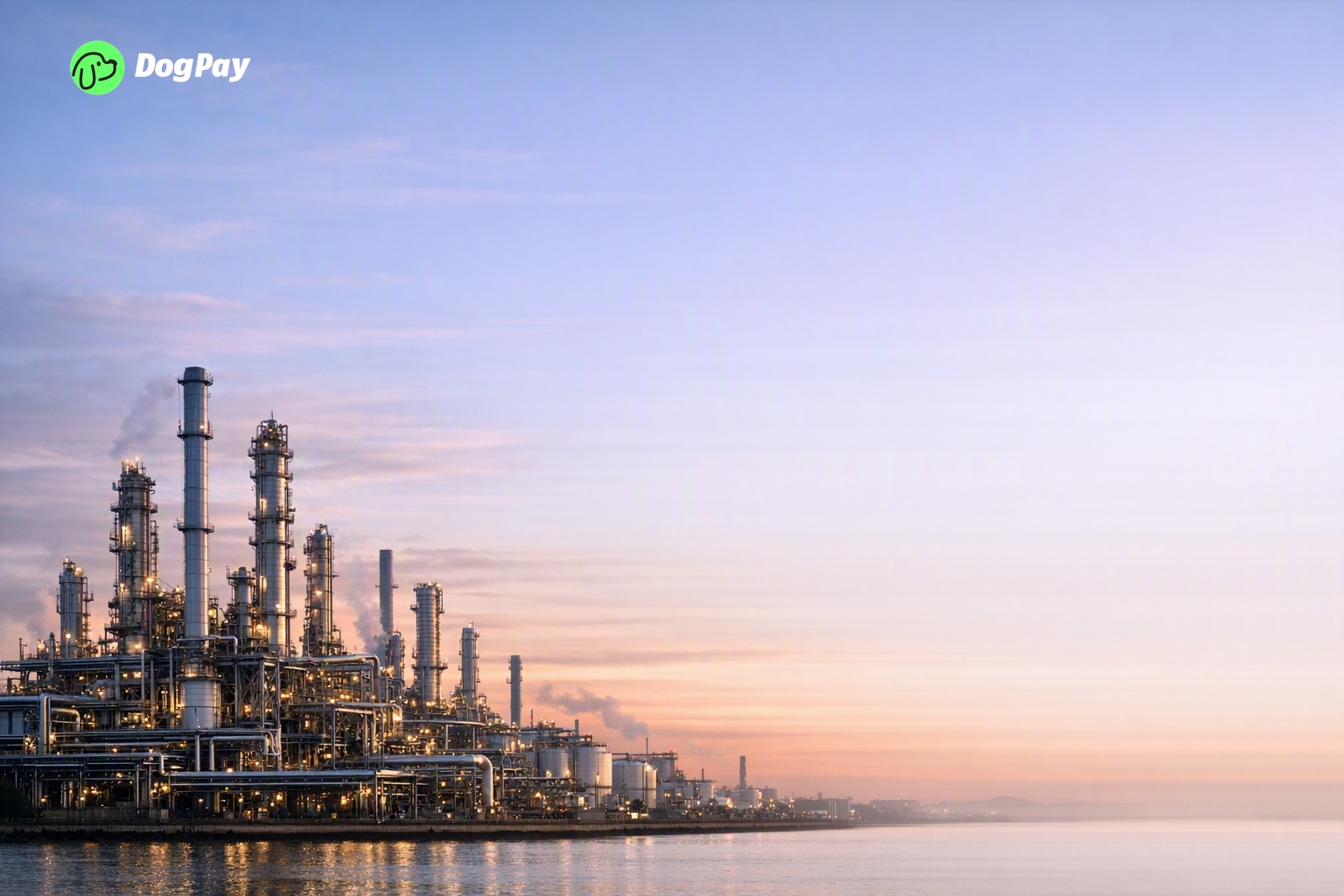
Dangote Refinery Warns It May Export Surplus Petrol as Nigeria Still Imports 43%
English version below, Chinese version above.
Trend One: The Energy Paradox — Local Refining Capacity vs. Persistent Imports
Nigeria's domestic refineries supplied 74.9% of the country's petrol between January and July 2026 — approximately 7.41 billion litres, up 73.5% year-on-year — while petrol imports fell 62.3% to 2.48 billion litres over the same period, according to NMDPRA data analyzed by The Punch (August 27). This marks a dramatic reversal from 2025, when imports accounted for 60.6% of supply.
Yet despite this capacity, imported petrol still represented 43% of market supply in July. On August 27, Dangote Petroleum Refinery warned it would be forced to export surplus petrol stocks, citing "limited visibility on future import volumes" from continued import licensing. The refinery said holding excess inventory without transparency on imports is "commercially unsustainable."
The disconnect extends to pricing. On August 26, despite falling international crude prices, petrol hit N1,212 per litre at the pump. Market sources attributed this to supply chain costs and distribution structures that have not adjusted in tandem with crude prices.
On the same day, President Tinubu urged NLNG's board to convert gas flaring into economic benefit. NLNG MD Adeleye Falade reported the company has generated over $150 billion since inception, with $47 billion returned to shareholders. Nigeria holds a 49% stake.
Separately, PENGASSAN's new leadership committed to working with NUPRC toward the 2030 target of 3 million barrels per day of crude oil output.
Why it matters: Nigeria has built the refining capacity to cover domestic demand, but regulatory policy on import licensing has not yet aligned with the new supply reality.
Trend Two: Fiscal Fundamentals Strengthen — Reserves at 17-Year High
Nigeria's foreign exchange reserves reached $53.11 billion as of August 24, the highest level since January 2009 ($53.25 billion), CBN data showed. The reserves have grown by $7.09 billion year-to-date, already exceeding the CBN's full-year projection of $51.04 billion for 2026.
Dr. Jerry Igwilo of Nisela Capital noted the stronger buffer but cautioned that "sustainability remains tied to oil revenues, capital inflows and FX market performance." The naira closed at N1,343 per dollar on August 26.
This comes as analysts from PwC and other firms argued on August 27 that the CBN's primary responsibility is macroeconomic stability, not choosing between attracting foreign portfolio investment and supporting local businesses. The CBN has held its Monetary Policy Rate at 26.5% since February.
Despite the reserves milestone, the equities market closed lower on the same day, with the All-Share index falling 402.25 points and investors losing approximately N260 billion in market value.
Separately, EFCC Chairman Ola Olukoyede disclosed on August 27 that the commission has recovered over N673 billion in assets over the past three years, and has established a 5% whistleblower reward mechanism.
Why it matters: The reserve buildup provides a rare bright spot in Nigeria's fiscal picture, but the stock market reaction suggests investor sentiment remains cautious on the broader economy.
Trend Three: 2027 Election Battle Lines Form Early
Political positioning for the 2027 presidential election is accelerating. On August 27, former Vice President Atiku Abubakar challenged the Tinubu administration to prosecute him if evidence exists linking him to the alleged $16 billion power sector spending during the Obasanjo era, calling revived allegations a diversion from questions over subsidy removal revenues. He asked, "Where is the people's money?"
The same day, Kuje Area Council Chairman Samuel Shekwolo's remark that residents should "support APC or leave" drew condemnation from ActionAid Nigeria and the ADC party. ActionAid's Country Director Andrew Mamedu warned against "normalising political intimidation," noting the comment follows similar rhetoric during the recent Osun governorship election.
On August 27, the ruling APC also reopened nationwide electronic membership registration, signaling formal launch of its 2027 campaign infrastructure.
Why it matters: At less than 18 months from the election, the overlapping issues of governance accountability, political intimidation, and party machinery are all surfacing simultaneously.
Trend Four: Infrastructure Bottlenecks and Education Reprioritization
The NCC granted MTN Nigeria conditional approval in principle on August 26 to proceed with its acquisition of IHS Towers, a deal that would reshape Nigeria's telecom infrastructure landscape.
In the power sector, NERC data showed DisCos failed to collect N669.5 billion in electricity bills in 2025, highlighting a structural collection gap. On the positive side, NDPHC announced it has recovered billions of naira worth of power equipment stranded at ports for nearly a decade — originally procured since 2007 — with NPA's support.
Cement prices surged above N15,000 per 50kg bag in some locations, despite Nigeria's installed production capacity of 60-65 million tonnes annually versus consumption of 25-30 million tonnes. Building operators warned this is worsening the housing crisis.
In education, the Federal Government is shifting funding from foreign scholarship programs to local research and innovation. Education Minister Tunji Alausa said on August 27 that sending students abroad for courses already available in Nigeria is "a way to waste government funds." The same day, the government unveiled a N365 million annual National Laureate Prize for outstanding academic research across universities, polytechnics, and colleges of education.
On the international front, Nigeria and Thailand committed to deepening bilateral cooperation in agriculture, technology, and renewable energy, with Vice President Shettima calling for a strategic review of the partnership framework.
Meanwhile, the Trump administration's global halt on immigrant visa applications adds fresh uncertainty for Nigerian family reunification and asylum seekers.
Why it context: The government is simultaneously addressing infrastructure bottlenecks (power, telecom, housing costs) while reorienting education spending toward domestic capacity — but structural gaps in both remain large.