Published by Dogpay ·
Standard Chartered Becomes First Traditional Bank to Distribute a Hong Kong Dollar Stablecoin
Trend One: Stablecoins Enter Traditional Finance as Distribution Infrastructure
August 22 — Japan's SBI Holdings led a $68 million Series C round in stablecoin neobank Fasset, pushing its valuation to $1 billion. Fasset's revenue grew 6x year-over-year, and the company plans to co-build a digital bank in Malaysia while expanding stablecoin payment operations across Southeast Asia.
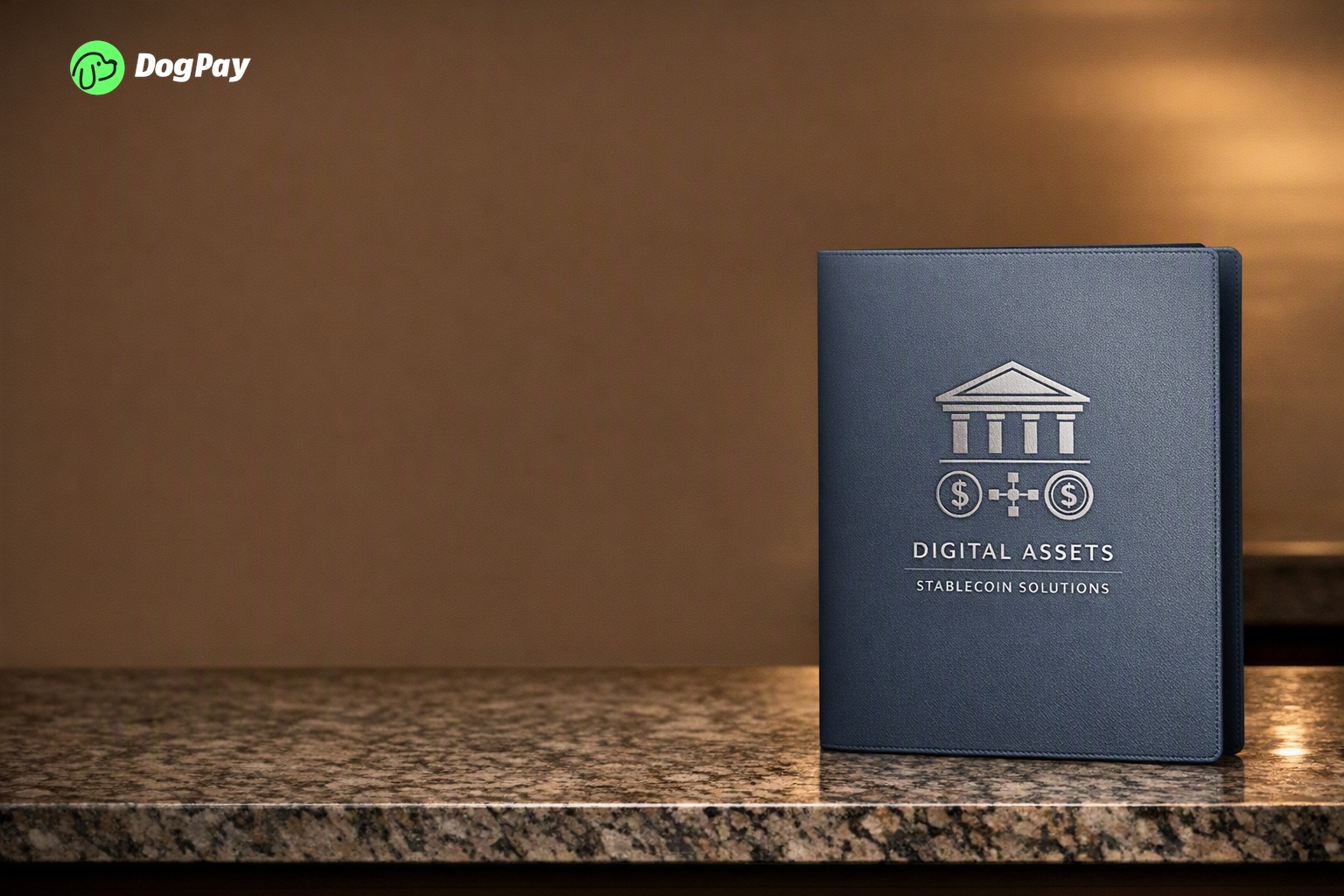
August 24 — Standard Chartered became the first traditional bank to distribute a Hong Kong dollar stablecoin. The bank will distribute HKDAP, issued by Anchorpoint, to qualified clients and partners. The move marks a shift from banks merely holding stablecoins to actively distributing them as a product.
August 23 — Crypto card spending surpassed $1 billion in annual transaction volume, more than tripling year-over-year. USDC and USDT now cover over 70% of consumer spending categories — groceries, ride-hailing, and subscription services — according to tracking data.
August 23 — Coinbase's AI product head said the next billion crypto users "might not be human" but AI agents, with stablecoins serving as the native payment rail between software systems. The executive described the current stage as the "Napster/LimeWire era" of AI-agent commerce.
August 24 — Bernstein maintained its Outperform rating and $140 price target on Circle, calling the stock a 59% upside from its $87.98 close. The analysts pointed to USDC supply growing by $1.7 billion in the past week after six months of sideways movement. Circle reported Q2 revenue of $701 million (up 7% YoY) and net income of $48 million. Bernstein argued that growth does not depend on the CLARITY Act passing in September — regulatory agencies may move faster on crypto rules if Congress stalls.
Why it matters: Four separate developments — bank distribution, neobank funding, consumer card spending, and AI-agent payments — all point to stablecoins evolving from a crypto-internal settlement asset into a general-purpose financial rail.
Trend Two: Regulatory Frameworks Converge — U.S., EU, and Emerging Markets
August 23 — The U.S. SEC formally published the full text of its "Reg Crypto" proposal, opening a 60-day public comment period. The framework represents the first systematic U.S. federal attempt to define which digital assets qualify as securities and under what conditions.
August 24 — Pakistan's PVARA launched a formal crypto licensing regime, setting September 5 as the registration deadline for existing Virtual Asset Service Providers. Firms that fail to submit a No Objection Certificate application must cease operations. The move marks an acceleration from tacit tolerance to regulated access in an emerging market of over 240 million people.
August 21 — Germany widened its lead under MiCA, with six cooperative banks added in the latest ESMA register update. The additions — Raiffeisenbank Aidlingen, Ihre Volksbank, VR-Bank Mittelfranken Mitte, Volksbank Euskirchen, VR Bank Ried-Überwald, and Volksbank Backnang — brought Germany's total authorized crypto asset service providers to 79, far ahead of France (35) and the Netherlands (29). Germany's total has grown from 57 in late June. The ART register remained empty, while the EMT register held 43 entries.
August 24 — Gemini partnered with Apex Fintech to serve as the exclusive crypto event contracts venue for Apex's CFTC-regulated futures commission merchant. The deal consolidates the compliant prediction market track under a single exchange.
Why it matters: The U.S., EU, and emerging markets are all building licensing frameworks in parallel. The difference is speed — Pakistan's 12-day registration window contrasts with Europe's graduated MiCA rollout and the U.S.'s still-open 60-day comment period.
Trend Three: Macro Crosscurrents — BTC Surges, T-Bills Find New Buyers, Institutions Reposition
August 24 — Bitcoin posted its second-largest weekly gain since early 2021, rising 24% to trade in the $77,000-$79,000 range. The rally was triggered by a $30 billion short squeeze following the U.S. Treasury buyback announcement. Bitcoin spot ETFs recorded $1.9 billion in net inflows for the week, while ether ETFs added $697.2 million — their largest weekly inflow of the year. Combined crypto ETF inflows reached $2.6 billion, the strongest week since October 2025. Weekly bitcoin ETF trading volume surged to $22.1 billion from $6.9 billion a week earlier, and assets under management rose 25.4% to $96.1 billion.
August 24 — Strategy (formerly MicroStrategy) raised $3.28 billion in August but did not buy any bitcoin with the proceeds. Instead, the company added the funds to its dollar cash pool, which now stands at $6.69 billion. Strategy described this as building a "digital credit capital framework" — positioning for future leverage rather than signaling a bearish view. The company still holds 840,447 BTC as of August 23.
August 24 — Chinese financial media Jinshi Data reported a structural shift in U.S. Treasury buyers: stablecoin issuers' holdings of T-bills continue to grow, positioning them as new marginal buyers alongside banks. This complements the long-running observation that stablecoin reserves are becoming a non-trivial component of short-term U.S. government debt demand.
August 24 — Tom Lee's Bitmine purchased $81 million of ETH in a single week, the largest weekly accumulation since early July. Lee said ETH's 30% weekly gain "could signal a bigger move ahead."
August 24 — Ray Dalio said investors should own "a bit of bitcoin" as U.S. debt risks rise, while reiterating his preference for gold as the larger hedge.
Why it matters: The macro setup — T-bill buyback, stablecoin issuers as new T-bill buyers, BTC surging on short squeeze — creates an unusual alignment. Bitcoin is rallying on dollar liquidity expectations, while stablecoin issuers are themselves becoming a structural part of that dollar liquidity system.